

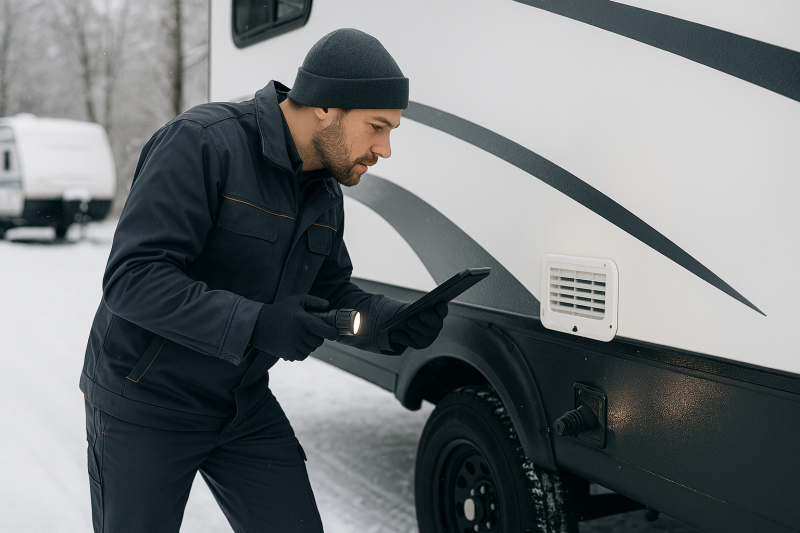
Winter RV Safety: How to Protect Your RV, Your Family, and Yourself
Winter RVing can be peaceful, beautiful, and rewarding—but it also comes with unique safety risks that every RV owner should understand. Cold temperatures, snow, ice, and reduced daylight can quickly turn minor issues into expensive repairs or dangerous situations if you’re not prepared.
Whether your RV is parked, in storage, or still in use during the winter months, here are the most important winter RV safety tips to keep you protected.
1. Protect Your Water System From Freezing
Frozen pipes are one of the most common and costly winter RV failures.
Winter safety tips:
-
Fully winterize your RV if temperatures will drop below freezing
-
Use RV-approved antifreeze (never automotive)
-
Open cabinet doors to allow warm air circulation
-
Disconnect hoses and drain exterior lines
-
Use heated hoses only when properly rated
⚠️ A single frozen fitting can crack and cause major water damage once thawed.
2. Be Careful With Space Heaters
Space heaters can help reduce propane usage—but they must be used safely.
Best practices:
-
Use only tip-over protected, RV-safe electric heaters
-
Never run heaters unattended
-
Keep heaters clear of bedding, curtains, and furniture
-
Avoid extension cords
-
Never use propane or fuel-burning heaters indoors
🔥 Improper heater use is a leading cause of winter RV fires.
3. Carbon Monoxide & Propane Safety Is Critical
Cold weather increases furnace use, making CO and propane safety non-negotiable.
What to check:
-
Test carbon monoxide and propane detectors monthly
-
Replace batteries before winter
-
Never block furnace exhaust vents with snow or ice
-
Keep vents clear of debris and ice buildup
If an alarm goes off—ventilate immediately and shut systems down.
4. Maintain Your Batteries in Cold Weather
Batteries lose efficiency as temperatures drop.
Winter battery safety tips:
-
Keep batteries fully charged
-
Clean corrosion from terminals
-
Use battery disconnects when storing
-
Consider removing batteries for indoor storage if unused
-
Avoid letting batteries freeze
❄️ A frozen battery can crack and fail permanently.
5. Watch for Roof, Seal, and Ice Damage
Snow and ice add weight and can hide leaks.
Inspect regularly for:
-
Cracked or separated sealant
-
Soft spots around vents and skylights
-
Ice dams forming near edges
-
Water intrusion after thaws
Catching seal issues early prevents major interior damage later.
6. Drive With Extra Caution (If Traveling)
Winter RV travel requires patience and preparation.
Safe winter travel tips:
-
Slow down and increase following distance
-
Check tire pressure (cold reduces PSI)
-
Keep tanks partially filled for balance
-
Carry emergency supplies
-
Avoid travel during severe weather when possible
🚫 If conditions are questionable, waiting it out is often the safest choice.
7. Schedule Preventive Inspections Before Problems Start
Many winter failures are preventable with proper inspections.
A professional winter safety inspection can catch:
-
Furnace issues
-
Failing seals
-
Electrical risks
-
Battery problems
-
Plumbing vulnerabilities
Final Thoughts
Winter RV safety isn’t about fear—it’s about preparation. A few proactive steps can save you thousands in repairs and protect what matters most.
If you’re unsure whether your RV is truly winter-ready, professional help can make all the difference.
Need Help Preparing Your RV for Winter?
MilTech RV Mobile Repair & Inspection
✔ Winterizing & de-winterizing
✔ Furnace & safety inspections
✔ Roof & seal checks
✔ Battery & electrical diagnostics
📍 Serving the Greater Des Moines Area
📞 515-257-6021
🌐 We bring the fix to you.
Add comment
Comments