

Why Get an RV Roof Inspection?
Your RV roof is the #1 most important part of your RV to maintain—and the most expensive to repair if problems go unnoticed. A simple roof inspection can save you hundreds to thousands of dollars by catching issues before they turn into major damage.
1. Roof Leaks Cause the Most Damage in RVs
Water intrusion is the leading cause of RV structural failure.
Without regular inspection, tiny cracks in sealant can allow water to seep in, leading to:
-
Soft spots in the roof
-
Mold and mildew
-
Rot in walls, flooring, and framing
-
Electrical issues
-
Delamination (bubbling walls)
A roof inspection catches these problems before they get expensive.
2. Sealant Breaks Down Faster Than You Think
RV roofs expand and contract with heat, cold, rain, road vibration, and sun exposure.
Sealants can crack in as little as 6–12 months, especially around:
-
AC units
-
Vents and skylights
-
Antennas
-
Roof edges
-
Solar mounts
An inspection identifies failing sealant early.
Schedule your inspection today.
3. A Replacement Roof Can Cost $6,000–$15,000+
That’s why a $125–$175 roof inspection is one of the best preventative services you can do.
Replacing or repairing:
-
Rubber (EPDM/TPO) roofs
-
Fiberglass roofs
-
Metal roofs
…all cost thousands. Inspections help avoid major repair bills.
4. RV Owners Rarely Go on Their Roof
Many RVers:
-
Can’t safely climb onto the roof
-
Have mobility concerns
-
Don’t know what to look for
-
Assume the roof is “fine” until it leaks
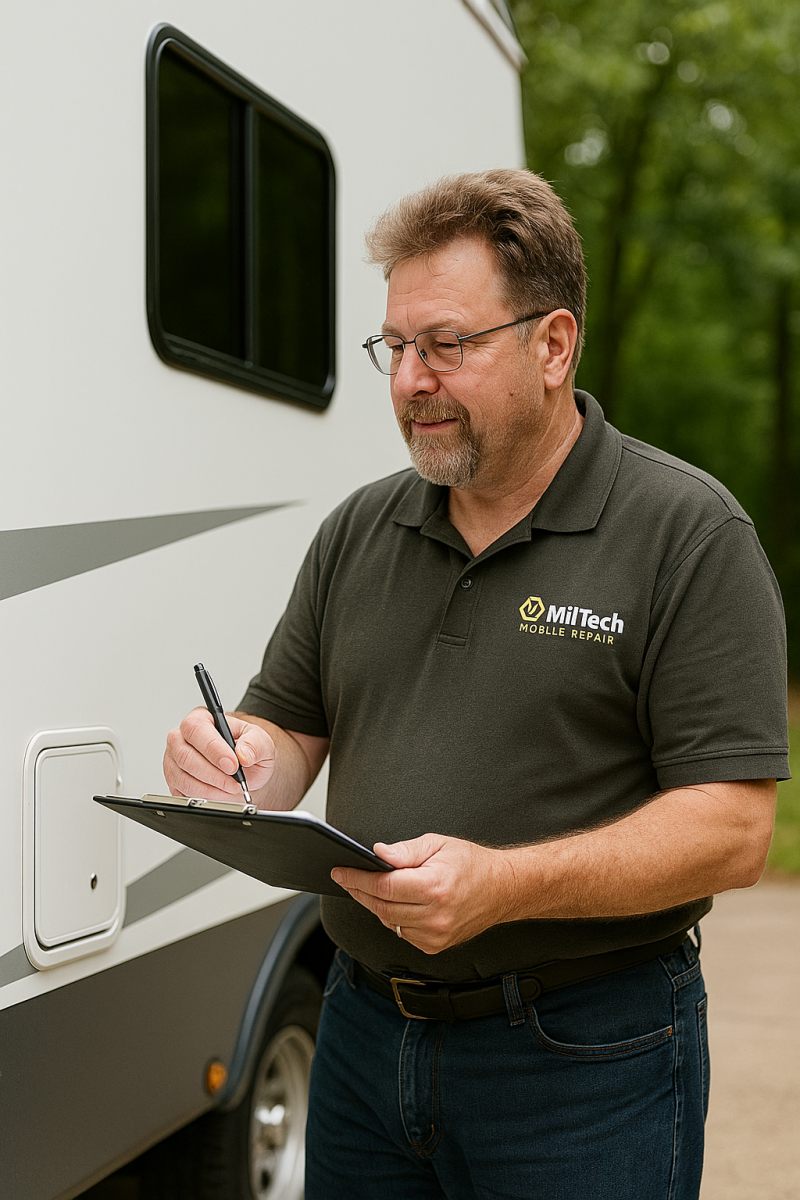
A professional inspection ensures a safe, thorough check from a trained eye.
5. Weather in the Midwest Is Tough on RV Roofs
For Iowa and surrounding areas, roofs face:
-
UV exposure
-
Freezing/thaw cycles
-
Heavy rain
-
High winds
-
Hail
-
Snow load
These conditions accelerate roof wear and sealant breakdown.
6. Peace of Mind Before Trips, Storage, or Buying a Used RV
A roof inspection is recommended:
-
Before long trips
-
After storms
-
Before winter storage
-
When buying a used RV
-
When selling an RV
-
Annually for all RV owners
It gives you confidence that your RV is protected.
7. Most Damage Is Hidden Until It’s Too Late
Water damage often remains unnoticed until severe.
A trained inspector can spot:
-
Micro-cracks
-
Lifting sealant
-
Soft spots
-
Early signs of moisture
-
Failing roof accessories
Catching problems early means simple, affordable fixes.