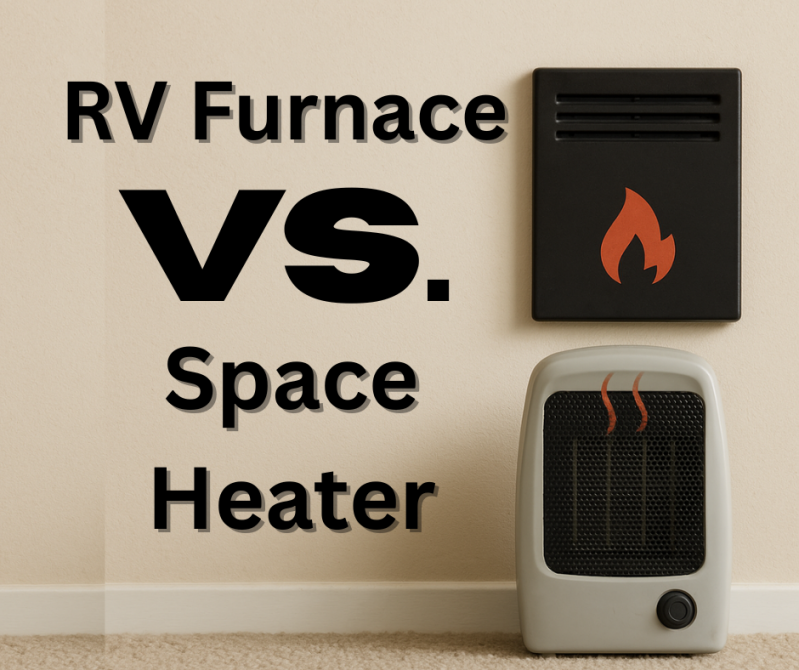
Staying warm in an RV during winter can be a balancing act. Many RV owners wonder whether they should rely on a small electric space heater, their propane furnace, or a combination of both. While space heaters can reduce propane use and add comfort, your RV furnace plays a critical role in protecting your plumbing and tanks—especially during freezing Iowa nights.
Here’s a clear breakdown of the pros and cons of each heating method, plus professional recommendations from certified RV technicians.
✅ The Benefits of Using a Space Heater
Electric space heaters are popular because they’re convenient, inexpensive, and perfect for mild winter days. When plugged into shore power, they can significantly reduce your propane usage—saving money and extending the time between refills.
Space heaters also provide quieter and more targeted heating. If you only need heat in the living room or bedroom, a small unit can keep that space perfectly comfortable without cycling the main furnace. Because they reduce the workload on the furnace, they can even extend the life of expensive components like blower motors and control boards.
❌ The Downsides of Relying on a Space Heater
Despite their convenience, space heaters come with limitations that most RV owners are not aware of.
1. No heat reaches your tanks or plumbing lines.
Your RV furnace is designed to push heated air through ducts that warm the underbelly, water lines, and holding tanks. A space heater only warms the room it’s in. On cold nights, this can lead to frozen pipes, cracked fittings, and costly water damage.
2. Electrical load is a real concern.
Most space heaters draw 1,200–1,500 watts. Running one on the same circuit as a microwave, coffee maker, or hair dryer can quickly trip breakers—especially in 30-amp RVs.
3. Fire and safety risks.
Improper placement, cheap heaters, or using extension cords increases fire hazards. Space heaters should never be left running unattended.
4. Uneven heating.
Bathrooms, bunk areas, and front cabins often stay chilly while the living room warms up. Inconsistent heating makes it harder to maintain overall comfort.
🔥 Why Your RV Furnace Still Matters
While the furnace consumes propane and makes more noise than a small heater, it performs a job electric heaters simply can’t.
1. It protects your entire RV.
When temperatures approach freezing, the furnace circulates heat into the basement, utility bays, and water systems. This is crucial for preventing freeze damage—one of the most common winter repair calls we see at MilTech RV.
2. It works anywhere.
Propane furnaces operate on propane and 12-volt DC power, making them reliable during:
-
Boondocking
-
Overnight travel
-
Campground power outages
3. It warms the RV evenly.
From front to back, the furnace keeps the whole coach at a stable, livable temperature.
🧊 So Which Should You Use? (MilTech RV Recommendation)
Above Freezing:
Use a space heater for comfort and propane savings. Keep the furnace on low or as backup.
Below Freezing (32°F or lower):
Your RV furnace must be your primary heat source.
You can still use a space heater, but never rely on it alone—your plumbing system needs the furnace’s ducted heat to stay safe.
Deep Freezes:
If temps drop into the teens, run the furnace more consistently and avoid leaving space heaters unattended.
🔧 Final Thoughts from Your RV Technician Team
Space heaters are great tools—but only when used correctly. Many RV owners try to save propane by shutting off the furnace entirely, not realizing that the real cost could be hundreds or even thousands of dollars in freeze damage.
If you’re winter camping around Des Moines, Ankeny, or Waukee and want your heating system inspected, tuned, or repaired, MilTech RV has your back.
📞 Need Help Staying Warm This Winter?
MilTech RV Mobile Repair & Inspection
Serving Greater Des Moines, Ankeny, Waukee, Bondurant & surrounding areas.
Call/Text: 515-257-6021
Website: miltechrv.net
Add comment
Comments